The Dogline




SAME DAY SHIPPING!
Hurry offer expires in



 Free Shipping Over $109 *
 Aussie Buyer Protection
 Price Match Guarantee






Electric Dog Fence vs Traditional Fence: Which Is Better for Australian Yards?

Written by Colin Seal
Every Aussie dog owner wants their furry mate to be safe while enjoying freedom outdoors. But when it comes to keeping your dog secure, should you go with a traditional fence or a modern electric (radio) dog fence?
In this article, we compare both options, covering cost, safety, appearance, and convenience and help you decide which one's best for your home, lifestyle, and dog.
🏗 Traditional Dog Fencing: The Classic Approach
✅Pros
- A solid fence provides a clear visual and physical boundary.
- Keeps stray dogs or wildlife out.
- Your dog learns the limit immediately.
- Good for visual privacy: Helps with noise reduction and security.
⚠️Cons
- Expensive installation: Timber, colorbond, or steel fencing can cost thousands.
- Fences can rot, rust, or warp over time.
- Dogs can dig or jump over: Persistent or athletic dogs may still escape.
- Council restrictions: Some areas have height or material limits.
- Once it's installed, you can't easily move or adjust the boundary.
⚡ Electric Dog Fence (Invisible Fence): The Modern Alternative
An electric or radio dog fence like those from The Dog Line Australia uses a hidden wire and a coded FM radio signal to create a safe boundary.
Your dog wears a receiver collar that warns them with a beep as they approach the line, and applies a mild static correction if they try to cross it.
Pros
- Much cheaper than building a physical fence.
- Flexible boundaries: Adjust the wire to protect gardens, pools, or driveways.
- Aesthetic appeal: No visual barriers — keep your views open
- Training-based system: Teaches dogs to stay within safe zones.
- Weatherproof technology: The Dog Line’s HDPe wire and surge protection are built for Australian conditions.
- Multi-dog compatible: Add collars for multiple pets on one system.
⚠️
- Dogs need guidance to understand their new boundary.
- No protection from external animals: It keeps your dog in but doesn't stop others from coming in.
- Relies on collar battery: You'll need to replace or recharge batteries periodically.
Cost Comparison: Electric vs Traditional Fence
|
Feature |
Electric Dog Fence |
Traditional Fence |
|
Average Cost |
$400 - $1,200 (DIY kits) |
$2,500 - $10,000+ |
|
Installation Time |
1 - 2 hours (DIY or pro) |
Days to weeks |
|
Maintenance |
Minimal (check collar, wire) |
Regular painting/repairs |
|
Visibilit |
Hidden / open views |
Visible barrier |
|
Scalability |
Easy to expand or move |
Fixed once built |
With The Dog Line’s Grounds Keeper or DogWatch FM1200 kits, you can secure small yards or large rural properties at a fraction of the cost of traditional fencing.
🧠 Safety and Training Considerations
The Dog Line promotes Gentle Steps training, helping dogs learn safely and stress-free. The collar's beep-warning system ensures dogs get a clear cue before any static correction.
When installed and used correctly, electric dog fences are safe and approved under Australian standards — offering both freedom and security.
🌳 Which Fence Is Better for You?
|
Best Choice For |
Traditional Fence |
Electric (Radio) Dog Fence |
|
Urban blocks |
✅Yes |
✅ Yes |
|
Large properties / rural areas |
❌Costly |
✅Perfect fit |
|
Garden protection |
❌ Limited |
✅Custom zones |
|
Aesthetic look |
❌Bulky |
✅Invisible |
|
Budget-conscious owners< |
❌ Expensive |
✅ Affordable |
|
Multi-dog homes |
✅With effort |
✅Easy expansion |
🐾 Conclusion
If you're after a cost-effective, flexible, and visually discreet way to keep your dog safe, an electric (radio) dog fence from The Dog Line is a smart solution; especially for Australian homes where property layouts vary and weather can be tough on traditional fences.
Traditional fences still have their place for full security and privacy, but when it comes to freedom, flexibility, and smart containment, invisible dog fences are leading the way.
Ready to upgrade your dog’s safety?
Explore The Dog Line's fullof Electric & Radio Dog Fences today or call 1300 843 364 for expert advice on the best system for your property.

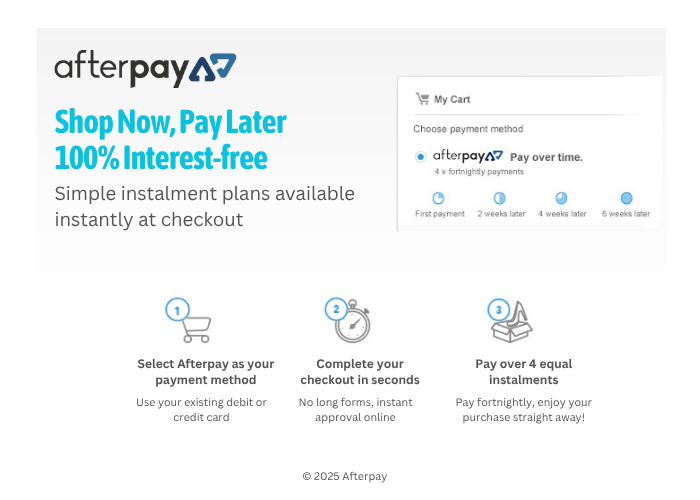
1) An Australian Visa or Mastercard debit/credit card; 2) To be over 18 years of age; 3) Valid verifiable email address and mobile number; 4) Legal capacity to enter into a binding contract: 5) Credit checks apply
Read Afterpay's complete terms, visit: https://www.afterpay.com/en-AU/terms-of-service